Common MVP Mistakes Female Founders Make
Use this guide to make a practical decision about common MVP mistakes, with clearer evidence, cleaner priorities and less wasted time.
Find the painful moment
Name the exact buyer
Ask for a real next step
Reach the right people
Deliver the first result
Summary
Use this guide when you need to make a practical decision about common MVP mistakes. It helps you separate real evidence from praise, decide what to test next and avoid building more than the market has earned.
The practical order is simple: define the decision, name the audience, collect evidence, choose the smallest next action and review the result before making the next commitment. This keeps the founder focused on proof instead of noise.
For Women in Startups readers, the goal is not a perfect plan. The goal is a clear next move that respects limited time, limited money and the reality that women founders often need stronger evidence before support arrives.
What This Guide Covers
This guide focuses on common MVP mistakes. It is organized as a problem-solution structure, so you can move from the problem to a decision, evidence standard and next action.
Key concepts in this topic include Over-building, wrong metrics, feature creep, premature scaling. Treat each one as a lens. If a term is unclear, write it down in plain language before using it in a customer conversation, sales page or funding conversation.
Use this guide to choose the next step for common MVP mistakes and test it before adding more work.
Visual Decision Snapshot
Use the visual snapshot below to check whether the validation loop is stuck on building, vague audiences, weak signals or an unclear offer before adding more work.
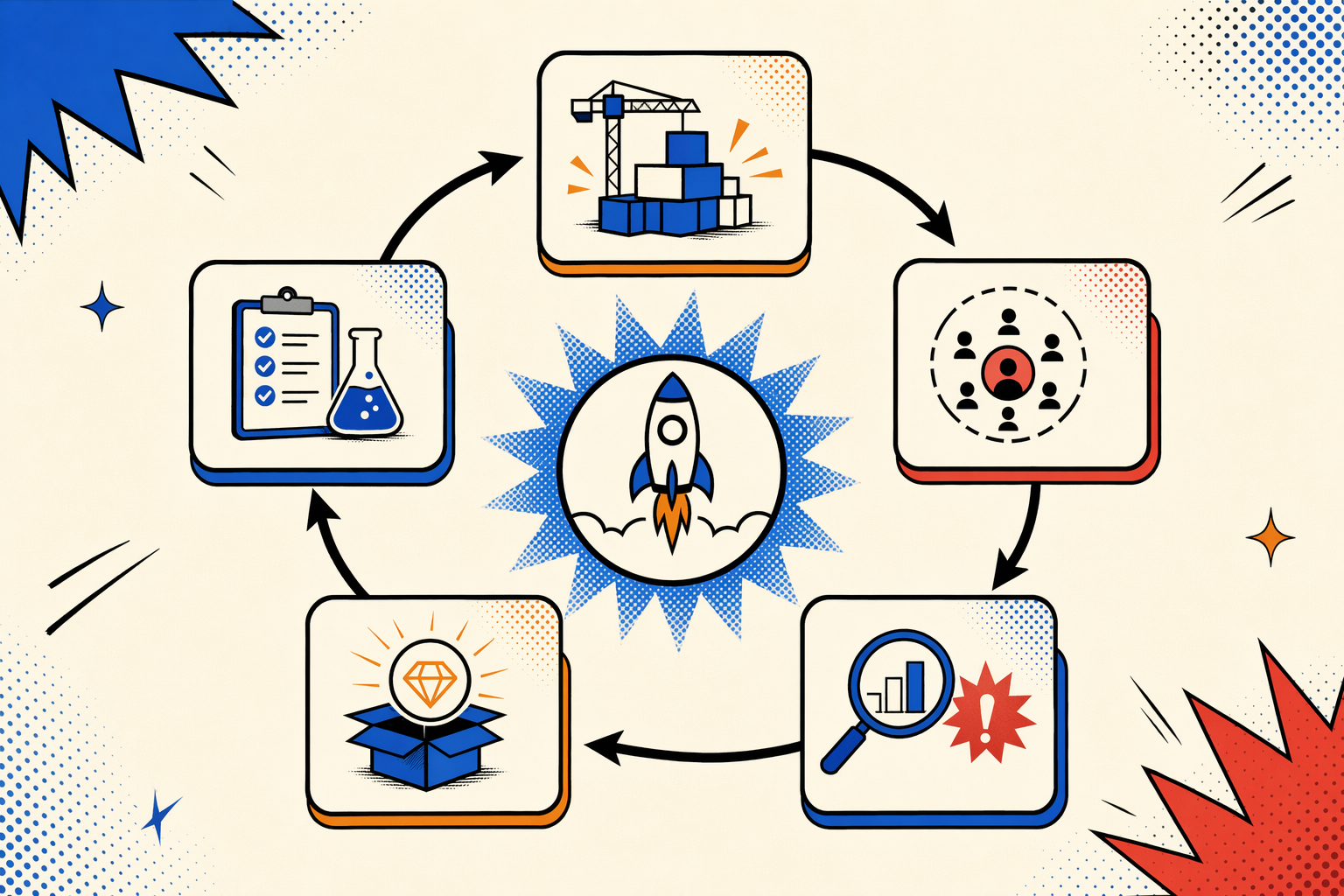
The Founder Decision Map
Use this five-part map before doing heavier work:
- Problem: name the exact thing being decided.
- Audience: identify the person, cost, constraint or moment that matters most.
- Offer: collect evidence from behavior, not only opinions.
- Channel: choose a small action that can be checked within days.
- Workflow: review the result and decide whether to continue, narrow, pause or change direction.
The useful test is the one that tells a founder what to stop, narrow, rewrite or build next.
Step 1: Name The Real Decision
Start by writing one sentence: "I need to decide whether…" Finish the sentence with one decision, not five. A founder who tries to decide everything at once usually ends up collecting mixed signals.
Good decision statements are narrow:
- whether this audience feels the pain often enough
- whether this offer earns a reply from people who match the audience
- whether this price creates a serious conversation
- whether this channel brings qualified conversations
- whether this workflow can produce the promised result without a bigger build
Weak decision statements are broad. They ask whether the business is good, whether the idea is interesting or whether people like the founder. Those questions are too fuzzy to guide action.
Step 2: Define The Evidence Standard
Before testing anything, decide what evidence would change your mind. This prevents the founder from treating every compliment as proof.
Use three evidence levels:
- Low signal: likes, praise, vague interest, friendly advice or general encouragement.
- Medium signal: replies, repeated problem stories, useful objections, specific follow-up questions and introductions.
- High signal: payment, deposit, repeat use, referral, booked call, signed pilot or a clear commitment of time.
The right evidence standard depends on the risk. A naming decision may need only medium signal. A hiring, loan or full build decision needs stronger proof.
Step 3: Choose The Smallest Useful Test
The best first test is usually smaller than the founder wants it to be. That is a feature, not a flaw. A small test reduces delay and makes the result easier to read.
Choose one of these test types:
- Interview test: ask about past behavior and the last painful moment.
- Offer test: send one clear promise to a narrow audience and ask for a real next step.
- Price test: ask for a deposit, paid pilot or written approval.
- Workflow test: deliver the result manually before automating.
- Channel test: put the offer in one audience source and track qualified response.
If the test cannot be run within a week, make it smaller. If the result will be hard to interpret, make the question sharper.
Step 4: Read The Result Without Drama
Founders often make validation emotional. A quiet test is not a personal rejection. It is information. Treat the result as a decision signal:
- Continue when the right people take a real next step.
- Narrow when the pain is real but the audience is too broad.
- Rewrite when people understand the problem but ignore the offer.
- Pause when the cost of the next step is larger than the evidence.
- Stop when repeated tests show no painful problem, no reachable audience or no willingness to act.
Write the decision the same day the evidence arrives. Waiting too long makes the story fuzzier.
A Practical Seven-Day Plan
Day 1: Write the decision statement and the evidence standard.
Day 2: Find ten people or accounts that match the intended audience.
Day 3: Ask five people about the last time the problem happened.
Day 4: Rewrite the offer using the words people used.
Day 5: Send the offer to one audience source and ask for a specific next step.
Day 6: Review replies, objections, silence and commitments.
Day 7: Choose one action: continue, narrow, rewrite, pause or stop.
The seven-day plan is intentionally simple. It gives the founder a complete learning loop without turning the week into a heavy process.
Common Mistakes
The first mistake is using a broad audience because narrowing feels risky. Broad audiences create weak messages. Narrow audiences create clearer learning.
The second mistake is testing opinions. People are often kind when asked for feedback. Past behavior, payment, time commitment and referrals are more useful.
The third mistake is adding features before the offer earns a response. More features can hide a weak promise and make the first version harder to sell.
The fourth mistake is treating one bad test as final. A single quiet test may mean the channel was wrong, the wording was unclear or the audience was too broad. Look for repeated patterns.
The fifth mistake is ignoring founder capacity. A test that requires more time than the founder can give will fail even if the idea has potential.
What To Record
Keep a short validation log with five fields:
- Decision: what you were trying to learn.
- Audience: who was included.
- Evidence: what people did, not only what they said.
- Change: what you changed after the test.
- Next action: what happens next and when.
This record helps when advice starts to conflict. It shows what happened, which assumption changed and why the next action makes sense.
Use outside references as a check, not as a replacement for customer evidence. Helpful sources for this topic include Lean Startup principles, Y Combinator startup advice, Nielsen Norman Group user interviews. The final decision should still come from the founder’s own audience, budget, time limit and evidence.
Topic-Specific Checklist
Use this checklist to keep common MVP mistakes practical:
- Name the riskiest assumption before choosing a test method.
- Ask about the last painful moment before showing a prototype.
- Use a manual or no-code version until the workflow proves the promised result.
- Track behavior such as replies, bookings, payment, repeated use or referrals.
- Avoid adding features until the audience and offer are clear.
Terms To Define
These terms shape the decision. Define them in plain language before a customer call, funding conversation, sales page or team handoff:
- Over-building: define how this affects the founder’s next decision, budget, audience or evidence standard.
- wrong metrics: define how this affects the founder’s next decision, budget, audience or evidence standard.
- feature creep: define how this affects the founder’s next decision, budget, audience or evidence standard.
- premature scaling: define how this affects the founder’s next decision, budget, audience or evidence standard.
Founder Scenario
A founder wants to move faster on common mvp mistakes female founders make. She writes the assumption, chooses one audience and tests the smallest useful action. The result tells her whether to continue, narrow, rewrite, pause or stop.
FAQ
What should I know about common MVP mistakes?
Treat common MVP mistakes as a founder decision, not a vague research topic. Start with the audience, the risk, the evidence needed and the smallest action that can create a useful signal.
Who should use this guide?
Use it if you are a first-time founder, a solo founder, a non-technical founder or a bootstrapped founder who needs a practical way to decide the next step.
What should I do first?
Start with one decision statement. Write what you need to decide, who the decision affects and what evidence would make you continue, narrow, pause or stop.
How much evidence is enough?
Use the risk level to decide. A small copy change may need only replies or calls. A loan, hire, full build or pricing change should need stronger proof such as payment, repeat use or a written commitment.
What evidence should I ignore?
Do not rely on likes, vague praise, polite encouragement or feedback from people who do not match the intended audience. Those signals can help morale, but they should not decide the business.
How does this help women founders?
It reduces wasted work and makes decisions easier to explain. That matters when support, capital, time and network access are uneven.
Can I use this without a technical background?
Yes. The guide focuses on customer evidence, offer clarity, simple workflows and decision rules. You can use forms, calls, documents, spreadsheets or no-code tools for the first tests.
How long should the first test take?
A first pass should usually take a week or less. If the test needs a month, shrink it until the evidence can arrive faster.
What if my audience gives mixed feedback?
Mixed feedback usually means the audience is too broad, the problem is not specific enough or the test question is unclear. Narrow one part before running another test.
What if nobody responds?
Silence is a signal. Check whether the audience was reachable, the offer was specific, the ask was clear and the channel matched how those people already seek help.
Should I ask friends for feedback?
Only include friends if they match the intended buyer and will behave like real buyers. Friendly praise can hide weak demand.
When should I pay for help?
Pay for help when the decision is high risk, regulated, legally sensitive, financial or outside your skill set. Use free tests for learning, but do not guess on liability, tax, contracts or health matters.
How should I compare two options?
Use the same evidence standard for both options. Compare cost, time, risk, customer proof and founder capacity, then choose the option with the clearest next test.
What should I document?
Document the decision, audience, evidence, change and next action. Keep the record short enough that you will actually maintain it.
How often should I review the decision?
Review after every meaningful test. For ongoing systems, review weekly until the pattern is stable, then monthly or at each growth point.
What is the biggest risk with common MVP mistakes?
The biggest risk is making the decision too broad. A broad decision creates vague evidence, and vague evidence makes the next action harder to defend.
What should I avoid?
Avoid copying another founder’s playbook without checking your own audience, price point, capacity and evidence. Similar ideas can need very different actions.
How does this connect to mvp?
It gives the mvp decision a clearer order: decide what matters, collect evidence, act small and review the result before doing more.
Can this guide be used with the F/MS Startup Game?
Yes. Use the guide to choose the decision you want to practice, then test that decision inside the F/MS Startup Game before spending money outside the game.
What is the next step after this guide?
Pick one decision, one audience and one evidence standard. Run the smallest useful test this week, then update the decision based on behavior rather than guesses.